Estate overview
A clear view of network work.
Open issues, estate navigation, and agent prompts share one workspace, so operators can see the state of the estate and decide where to go next.
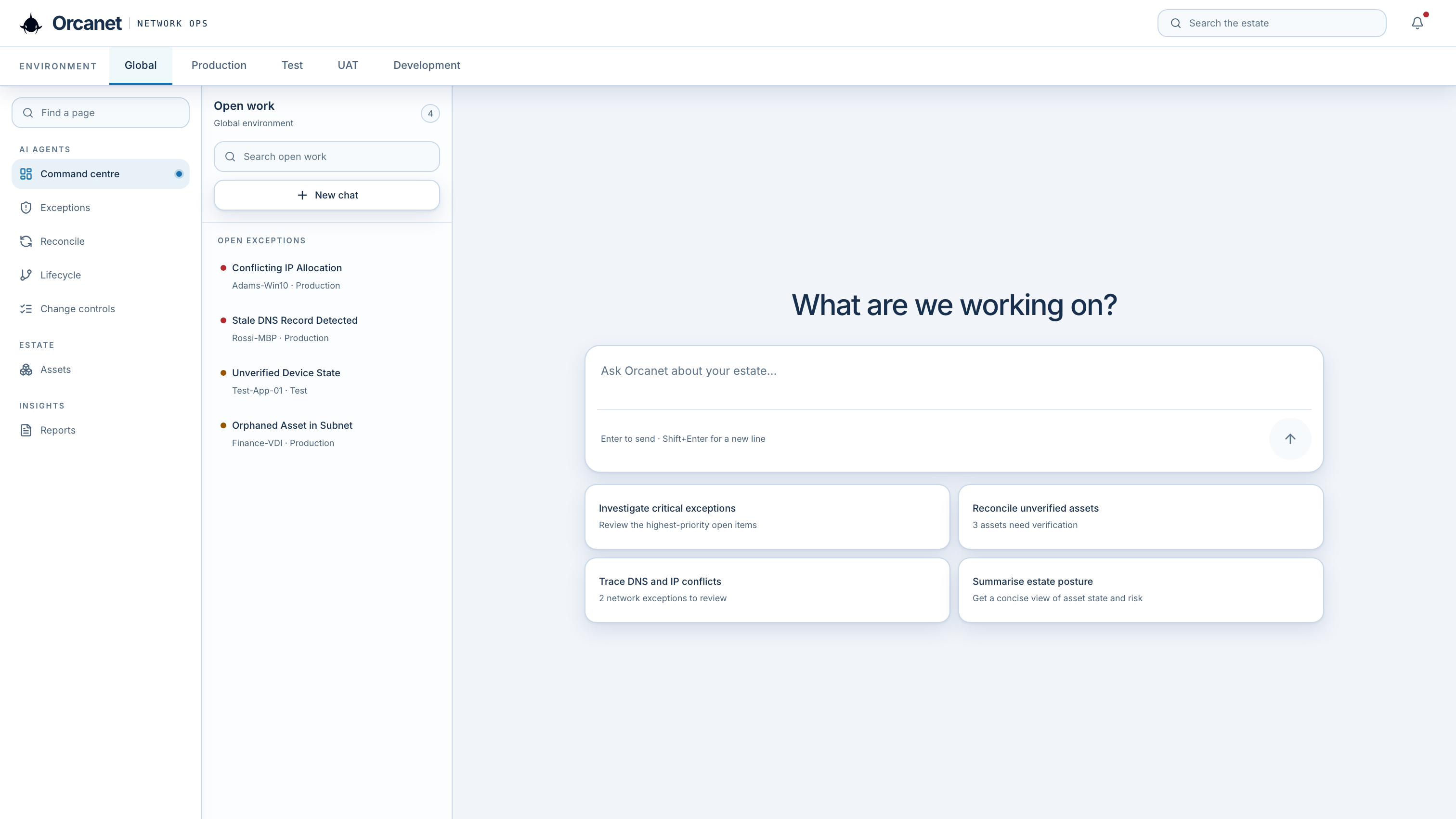
I shaped Orcanet around a single, reliable record of every network asset. Reconciliation, lifecycle control, and change management live in one place, so the person answering for the estate knows what is on it.
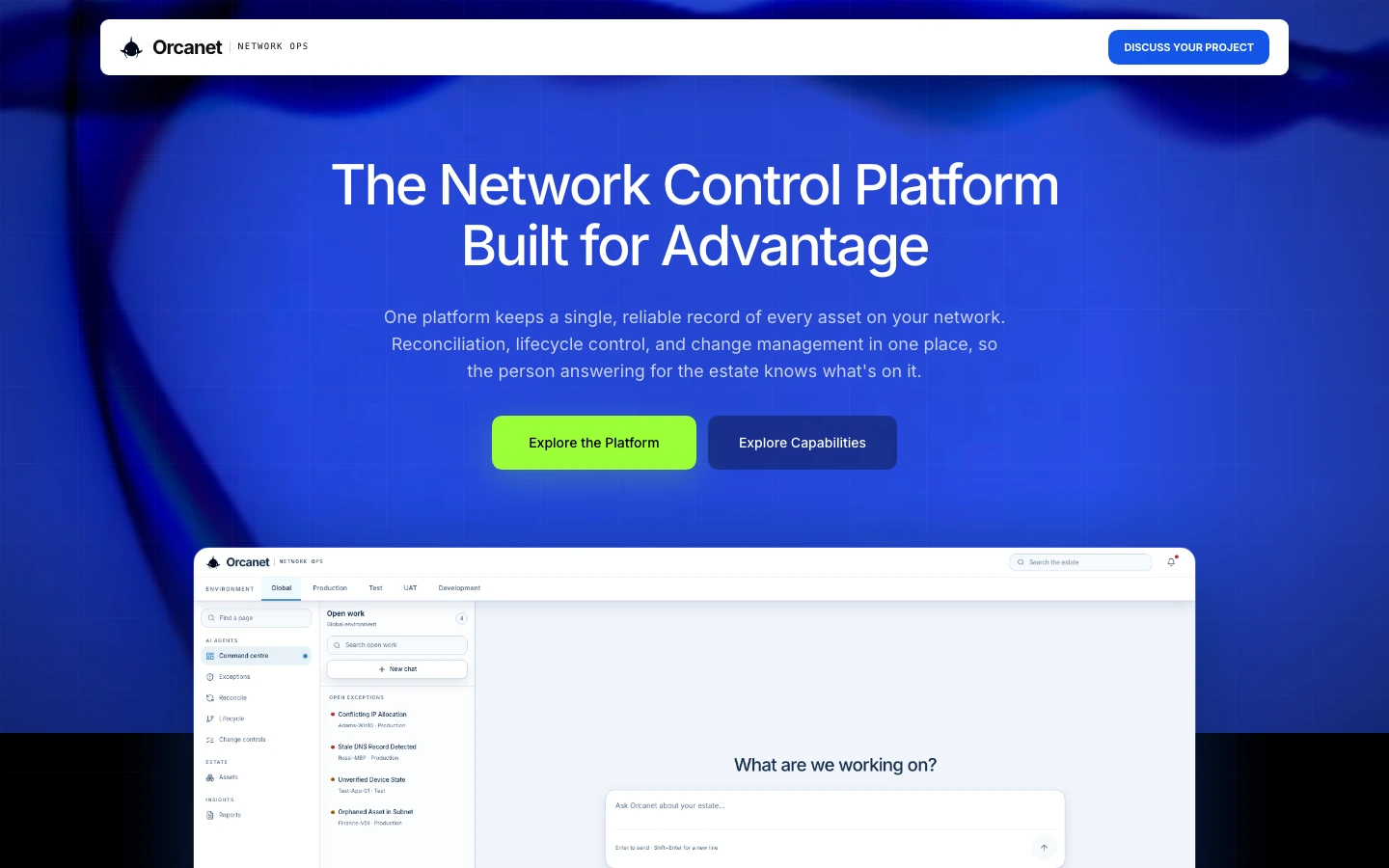
At this scale, stale records and fragmented device state affect change safety, incident response, audit posture, and automation. The product brings reconciliation, lifecycle controls, and change checks into one workflow.
The current interface keeps operational state, ownership, validation, and the next action close together.
Open issues, estate navigation, and agent prompts share one workspace, so operators can see the state of the estate and decide where to go next.
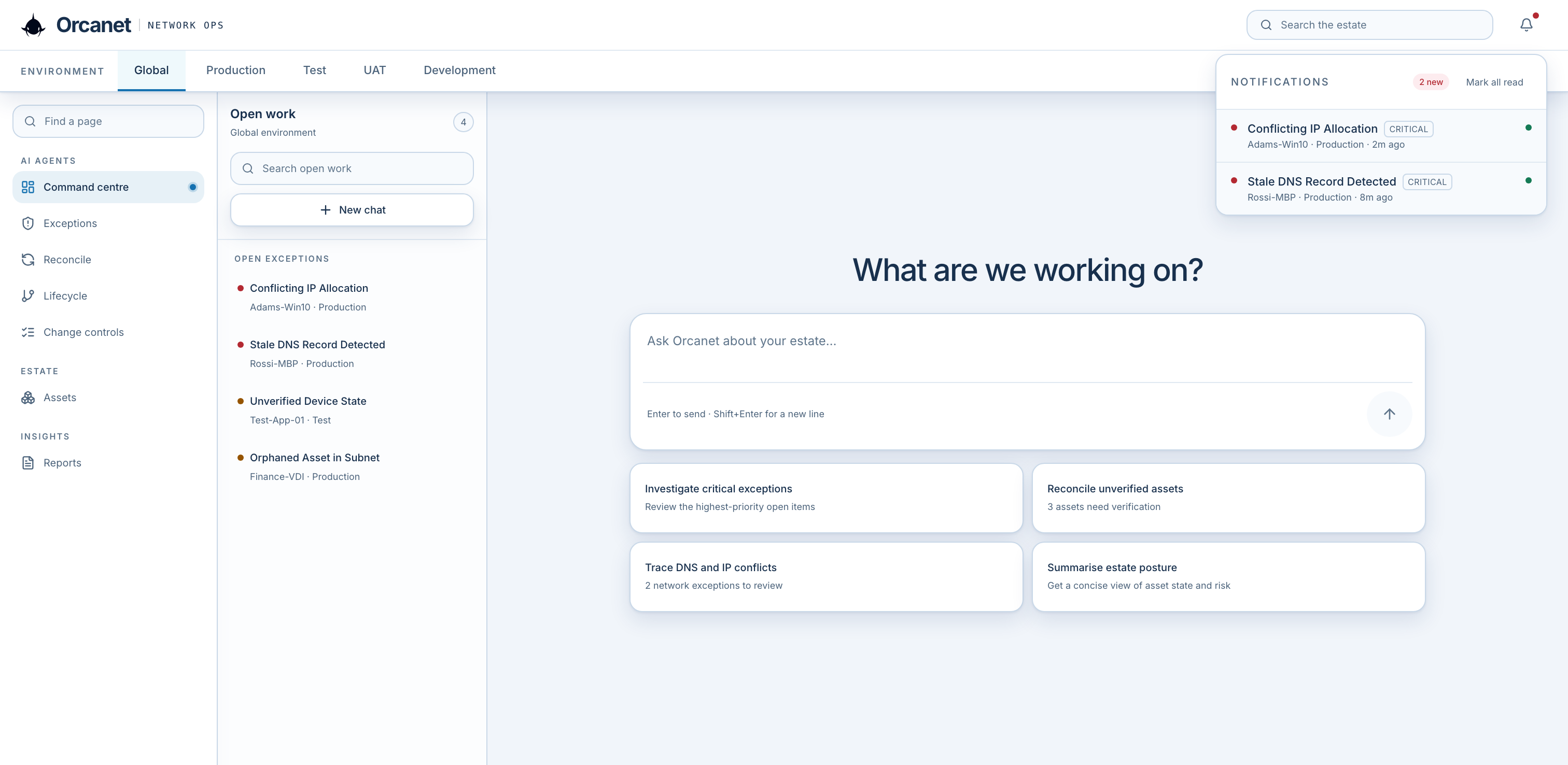
The operator queue keeps urgent findings visible alongside notifications, so the next action and its context stay close together.
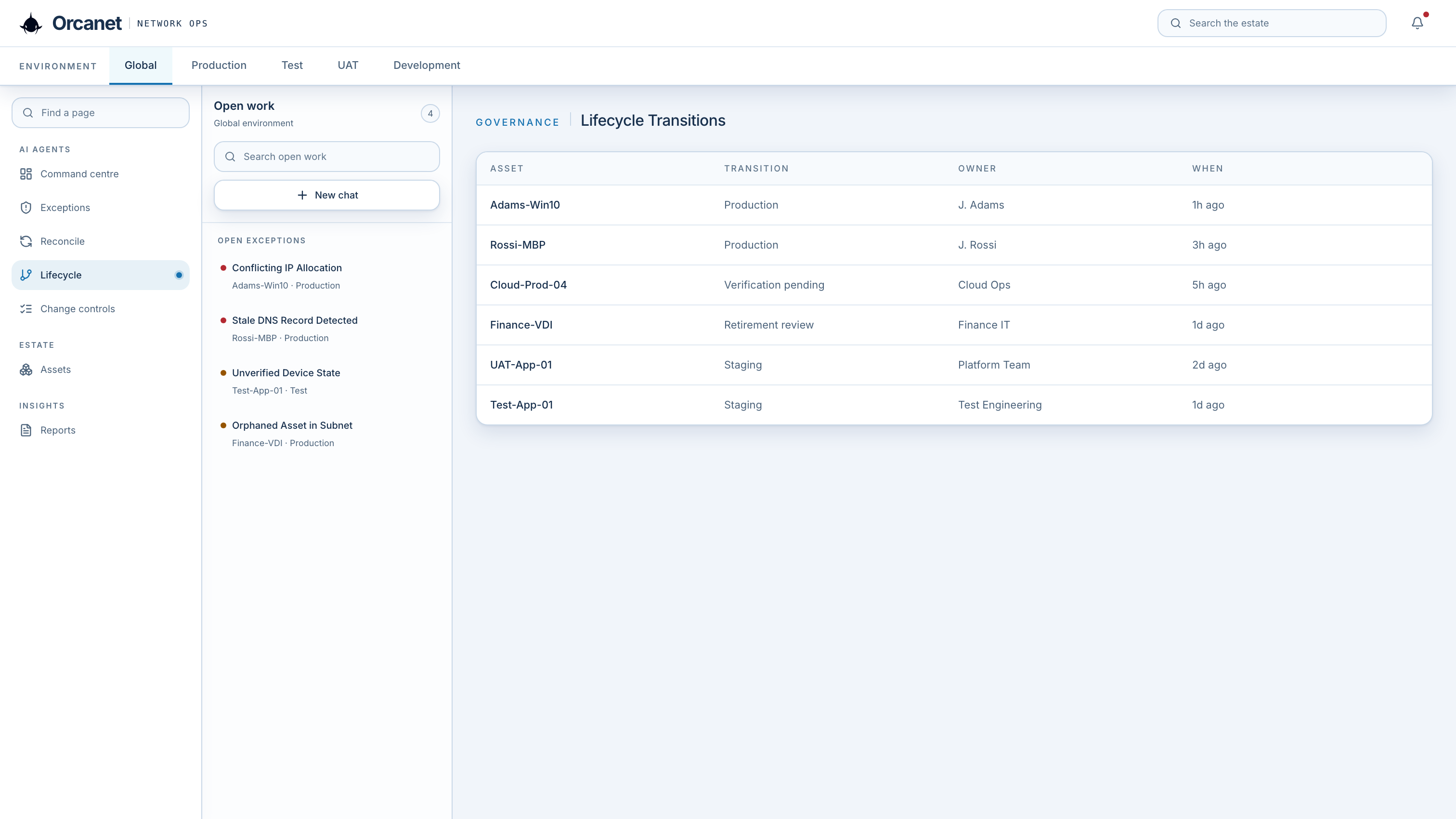
Each transition records the asset, state, owner, and timing, making it easier to understand what changed and what should happen next.
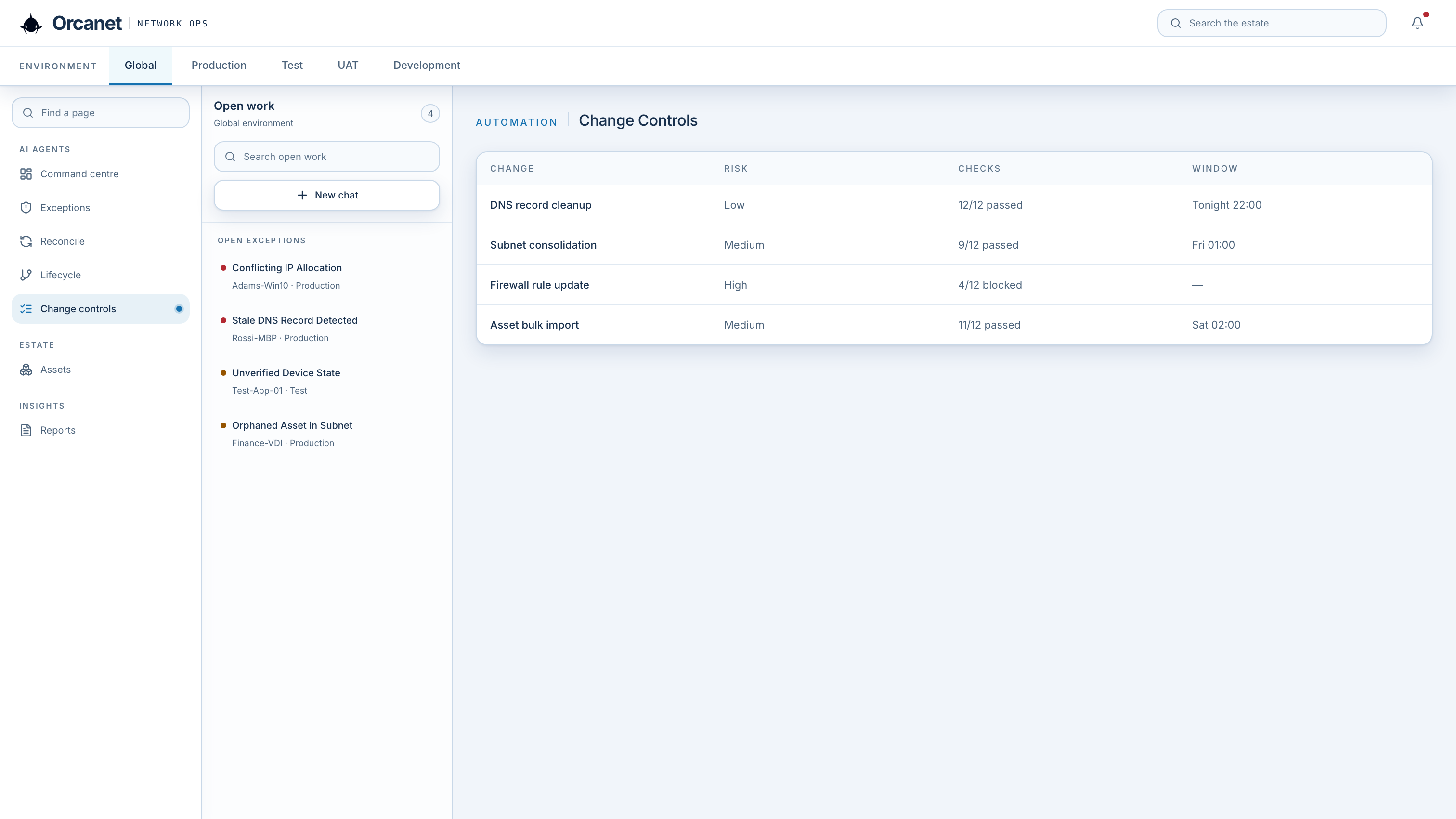
Validation results and deployment windows stay visible for each proposed change, with unsafe actions held back until the required checks pass.
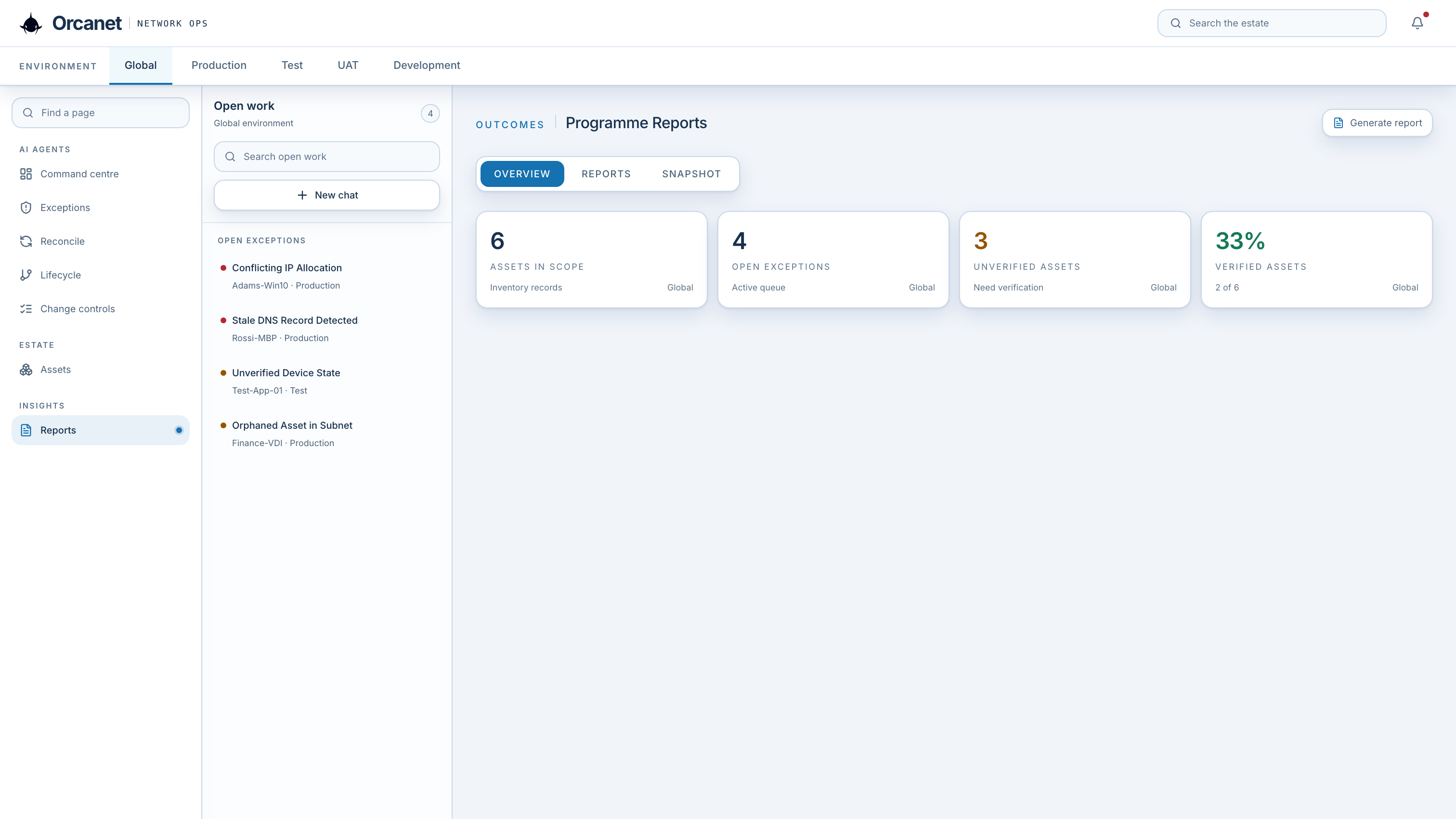
Track verified assets, unresolved exceptions, and remediation progress across the estate, with a view that works for programme owners and executive review.
The work connects asset records, lifecycle governance, exception management, change validation, and reporting. The design challenge is to make complex estate state legible without hiding the detail operators need to make safe decisions.